
A very well-read friend of mine, who is not a writer, keeps giving me the sage advice of write what I know. I’ve tried that. I don’t like it. I much prefer to let my somewhat askew of center brain go to places of imagination which I have never experienced or seen. Am I crazy or what?
—Jocko
Well, Jocko, yes, you probably are crazy. Welcome to the club.
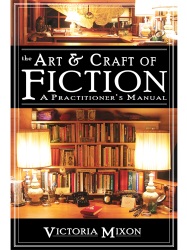
You know this is actually a really important issue for writers. I talk about it a bit in The Art & Craft of Fiction. It’s true, the advice to ‘write what you know’ truly is sage advice but highly misunderstood.
The rationale for writing what you know lies in authenticity. All fiction hinges on authenticity—the details of your characters’ world, the way they speak, the way they move, the logic of how their mistakes blow up into ever-bigger and -bigger mistakes until their lives come crashing down upon their heads.
Now, if you write realistic stories about characters who live lives quite similar to yours, then you don’t have to waste a lot of time on research. All you have to do is carry a notebook around with you as you go bumbling about your daily business and take notes on it: describe what it looks like where you eat your meals, describe what it looks like where you work, describe your favorite bars and hang-outs, describe your home and friends’ and family’s homes. Study the ways in which you and the people you know speak and express yourselves, your gestures and expressions and mannerisms, your body language, your noises, your subtleties, your silences. Study the cause-&-effect of how events in your lives play out. Study it carefully.
However, if you write fantasy or sci-fi or mystery or horror or some permutation of those umbrella genres, you’ve put yourself in a position in which you can’t do your research the lazy way, just by being you. You have to spend a lot of time—a whole darn lot of time—getting to know your characters’ world. It’s not right there in front of your face. You have to seek it out.
If you’re writing sci-fi you need to study the science upon which your characters’ world is based, and you need to study the logic by which reasonable extrapolations might be made that would result in the events you want to explore. If you’re writing mystery or horror you need to study the craft of mystery or horror so you know how to lay clues and interweave red herrings, build tension through verbal techniques and understanding of human psychology, in order to give your readers the thrill for which they read. And if you’re writing any type of fantasy—just making it all up yourself—you need to do an astronomical amount of world-building, ala J.R.R. Tolkien. All that iceberg, as Hemingway said, holding your story up and giving it its dignity.
This is a ton of work. And it takes a seriously long time.
So mentors and teachers often advise aspiring writers—whom they suspect of being in a bit of a hurry and unaware of the extraordinary amount of time it takes to learn to write well and then do it for each and every novel, much less spend all that time inventing entire worlds—to stick with the easy path and fill their writing with whatever they can easily observe.
However, on the other side of the coin lies the fuel of all great fiction, which is the writer’s own unique, quirky, unreproduceable take on how all those details interact with each other and create layers of meaning above and beyond the dry facts. And that’s what’s happening to you when you long to let your “somewhat askew of center brain go to places of imagination.”
Go there! That’s the fun of writing fiction.
But no matter what stories you choose to tell, if you want them to be any good or to matter in any way to your reader—you still have to write what you know.

“The freshest and
most relevant advice
you’ll find.”
—Helen Gallagher,
Seattle P-I
The Art & Craft of Story